
Blueprints That Breathe: Bringing Strategy to Life Through Empathy in 2025
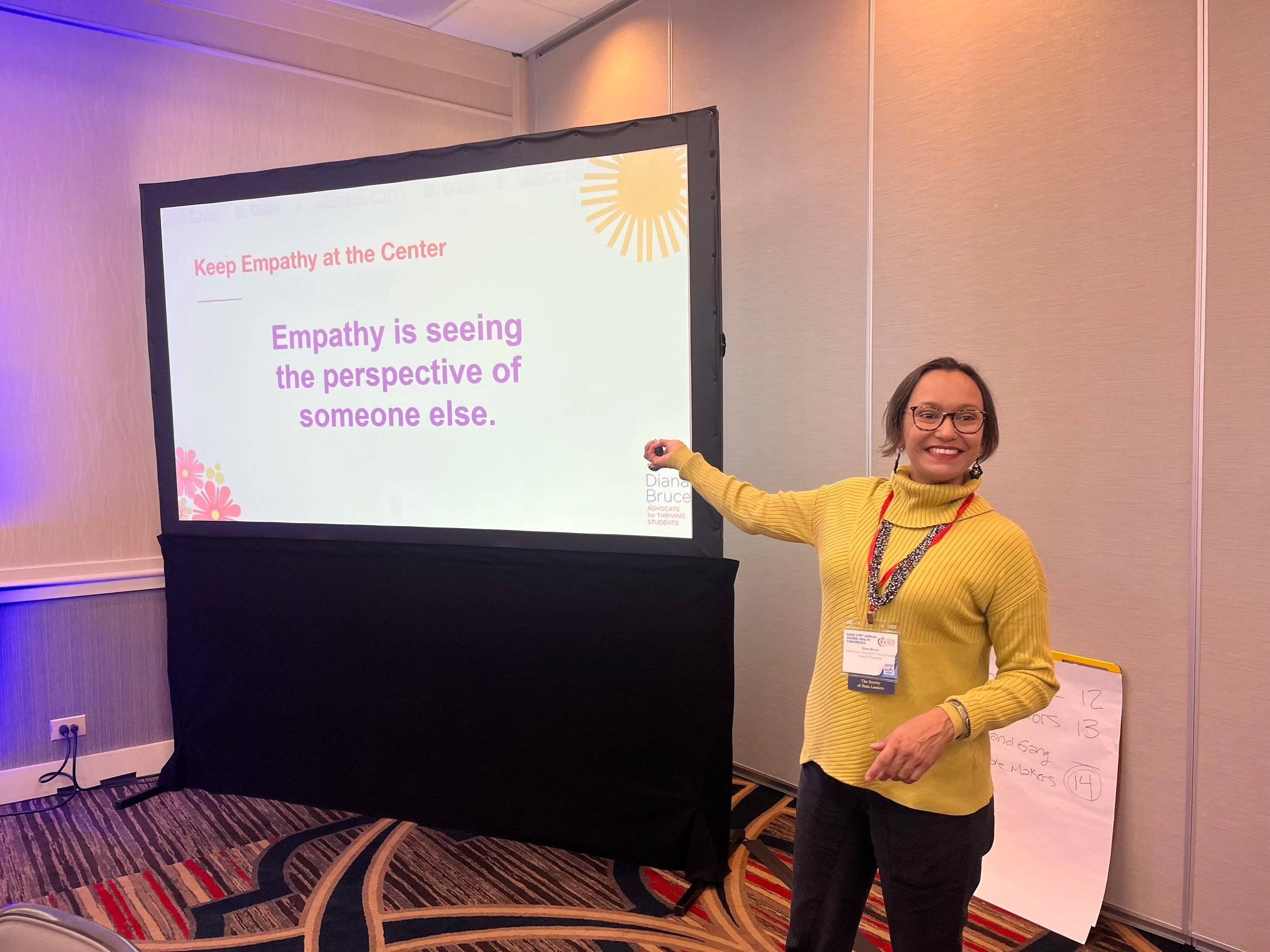
Presenting at the ASHA Conference in October
This past year, my writing has circled around one big question: How can we create environments where every stakeholder’s experience, not just the most visible or vocal, is listened to and their perspective incorporated into the priorities of the organization?
First, I wrote about strategic planning as the bridge between ideas and execution, providing a clear path forward, grounded in empathy, collaboration, and real-world practicality. Next, I wrote about policy as a living thing, not a dusty binder on a shelf. Good policy supports people, and great policy also reflects them, their lived experiences, needs, and hopes. Then, I leaned into “The Thriving Stakeholder”; that sweet spot where strategy meets radical empathy, and people feel like they truly belong. Finally, I shared my approach to coaching and training, turning planning into practice by delivering an experience that sticks – where leaders and teams become equipped, energized, and ready to lead change that’s not just performative, but personal and powerful.
Through all of this, I keep coming back to a truth that has become my not-so-secret sauce with clients: empathy isn’t a nice-to-have, it’s the foundation. You can hire anyone to facilitate your strategic plan, but when you hire me, you’re going to see me build empathy into every step of your planning, policy, engagement, coaching and training. You can have the best plan in the world, but if it isn’t built with and for the people it impacts, it’s bound to crack under pressure.
Not long ago, I facilitated the strategic planning process for a vibrant organization whose previous strategic plan was awesome on paper. The goals were clear and the language polished, and somewhere along its five years, momentum and accountability lapsed. The plan’s metrics became disconnected from the daily realities of the staff “implementing” it, and the people it was designed to serve.
Not long ago, I had the privilege of facilitating the strategic planning process for a dynamic organization I’ve admired for years. While their previous five-year plan was strong in its articulation – featuring clear goals and polished language – its momentum and accountability diminished over time, through staffing changes and the like. We learned that the plan had become somewhat neglected due the day-to-day operational realities of the staff and a changing landscape.
Instead of jumping straight to environmental scans and my words of wisdom, I started with a whole lot of listening sessions with a mix of stakeholders, including board members, staff, partners and the organization’s membership. Through stakeholder feedback and deep discussions about future hopes for the organization, we were able to step back to have hard conversations about the environment the organization was going to operate in over the next five years and its potential impact on the membership. With this, we established a clear strategic framework to serve the organization’s constituents, prioritizing impact measures that strike a balance between aspirational goals and practical ease of management and tracking. This focus ensures staff can effectively monitor progress and allows the organization to build on its presence a recognized leader in its professional domain, and a place called “home” by its members.
And that’s the difference. “What’s missing?” “Whose voices are we not hearing?” When leaders slow down to ask important questions like these, they move from compliance to connection and have the opportunity to craft a plan that creates a living, breathing blueprint. And when stakeholders see their fingerprints on the plan, they also see themselves in the organization’s future. (And yes, early feedback is that both the staff and the membership have been quite happy to see their fingerprints on the plan!)
The most successful organizations don’t treat empathy as a side project. They bake it in. They invite stakeholders in early, listen deeply, and adjust without ego.
If you’re ready to make your strategy more than a static plan or some policy on the shelf, that’s truly designed for the folks it’s designed to serve and those with the job of implementing it, I’d love to help you get there. No jargon-heavy deliverables, and definitely no one-size-fits-all templates. You’ll get honest conversations, authentic facilitation, and practical tools you can put to work immediately.
Because thriving shouldn’t be an aspiration, it should be the culture.
Let’s talk about how to get there.